
Affiliate disclosure: this article contains an affiliate link to Shopify. If you sign up through it, Mat Media may earn a commission at no extra cost to you. It never changes the price you pay or our opinion of the tools we write about.
Many launches fail quietly. The product is ready, a post goes out on launch day and then silence follows, because nobody was waiting for it. A launch is not a single announcement, it is a short campaign that builds attention before the date, makes the date count and keeps the momentum afterwards.
This guide gives you a realistic four-week plan that a small team or a single owner can run. It covers what to do each week, what to publish, how to use email and social media together and how to measure whether it worked.
Before week one: set the foundations
A launch plan needs a few decisions made up front. Without them, every piece of content becomes guesswork.
- One goal: sales, bookings, sign-ups or waitlist members.
- One audience: a specific type of customer, not everyone.
- One offer: what they get and why now is the time.
- One destination: a page where people can act.
- One date: a launch day you can prepare for.
Write these five lines at the top of a document. Every post, email and ad should serve them.
The four weeks
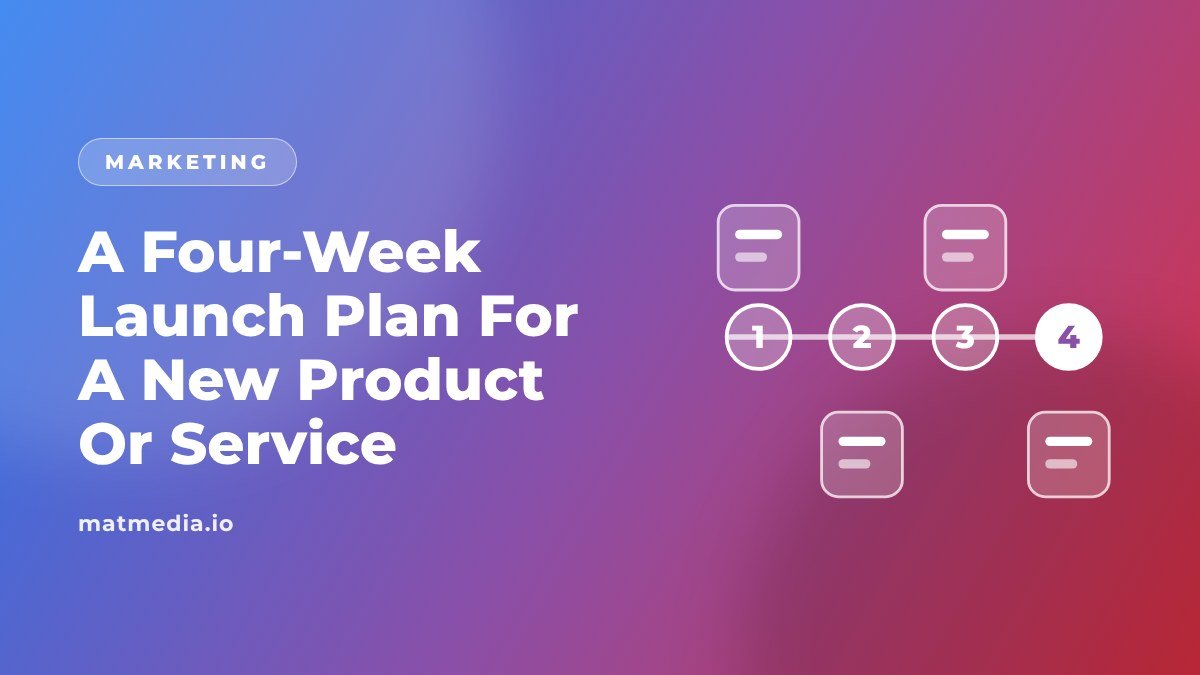
Week 1: Prepare and listen
Use the first week to prepare the base and understand your audience. Check that the landing page is ready, the offer is clear and tracking works. Ask potential customers what problem they want solved, and look at the words they use. Create a simple list of interested people: a waitlist, an email form or a message group. Publish a first post that introduces the problem you are solving, without revealing everything.
Week 2: Build curiosity
Share behind-the-scenes content: how the product is made, why you created it, early feedback and sneak peeks. Make this useful, not only promotional. Educational posts that connect to the problem work well, because they attract the right people before the offer even appears. Send the first email to your list with a short story and an invitation to stay close.
Week 3: Reveal and warm up
Show the product or service properly. Explain who it is for, what it includes and what it costs, or share early access details. Answer common questions in posts and stories. Send a second email with the full offer and the launch date. If you have early customers, testers or partners who agreed to share their experience, feature them, with permission and honestly.
Week 4: Launch and follow through
On launch day, announce on every channel you use, send your main email and make the destination page easy to find. During the following days, keep posting: answer questions, share first results and remind people when the offer ends, if it truly does. Send a last-chance email before any deadline, and a thank-you note to those who joined.
A sample content calendar
- Week 1: a problem post, a poll or question and a waitlist invitation.
- Week 2: a behind-the-scenes post, a story series and an email.
- Week 3: a reveal video, an FAQ post and the offer email.
- Week 4: a launch post, daily stories and a closing reminder.
Adapt the number of posts to what you can keep up. A smaller plan that you actually follow beats a large one that stalls.
Using email and social media together
Social media helps people discover you, while email helps you convert them. Use social posts to bring people to your list, and use email to give them the full story and the offer. Email is also yours, since you do not depend on an algorithm to reach people who already said they were interested.
Keep emails short, clear and focused on one action. Use a subject line that says what is inside, and send the most important email at a time when your audience tends to read.
Should you use paid ads?
Paid ads can add reach during the launch window, but only if the landing page and offer are ready. Start small, send traffic to the specific launch page and test a few creatives. Warm audiences, such as people who watched your videos or visited your site, usually respond better than cold ones. Always follow each platform's advertising rules.
What to measure
- Reach and engagement: are the right people seeing and reacting?
- List growth: how many people joined the waitlist or list?
- Click-through: how many visited the launch page?
- Conversion: how many of those visitors acted?
- Revenue or bookings: the result the launch was for.
Look at the trend each week rather than waiting until the end. If people click but do not act, the page or offer needs work. If nobody clicks, the message or audience needs work.
After the launch: keep the momentum
A launch does not end on day thirty. Collect feedback, publish the first customer stories with permission, answer the questions you heard most and update the page to address them. Turn the best-performing posts into ads or evergreen content, and plan what comes next. The audience you built is the real asset.
Launching an online store or product line
For physical or digital products, make sure the product pages, checkout and shipping information are ready before the first announcement. If you are still setting up, Shopify is one platform where you can create a store, add products and prepare a launch page without writing code.
Common launch mistakes
- Starting promotion too late. Attention takes time to build.
- Announcing only once. Most people miss a single post.
- Sending traffic to a weak page. The destination decides the result.
- Offering too many choices. One clear offer converts better.
- Forgetting follow-up. Many sales come after launch day.
- Not measuring. Without numbers you cannot improve the next launch.
Frequently asked questions
Is four weeks enough?
For many small launches, yes. A bigger product or a complex service may need longer. The structure stays the same: prepare, build interest, reveal and follow through.
What if I have no audience yet?
Start building one in week one by sharing useful content and inviting people to a waitlist. A small, engaged group is more valuable than a large, silent one.
Do I need a discount to launch?
No. A clear reason to act now, such as early access, a bonus or limited availability that is genuinely true, can work better than discounting.
Final thoughts
A good launch feels organized rather than loud. Decide the goal, build interest for three weeks, make launch day count and keep going afterwards. Write the plan down, follow it week by week and use the numbers to make the next launch stronger.
 How To Build An Email List From Scratch
 A Simple Monthly Social Media Plan For Small Brands
 How To Automate Lead Follow-Up With A Simple Workflow